
Political Paper: The Role of Physiotherapists in Armed Conflict and Inhumane Warfare
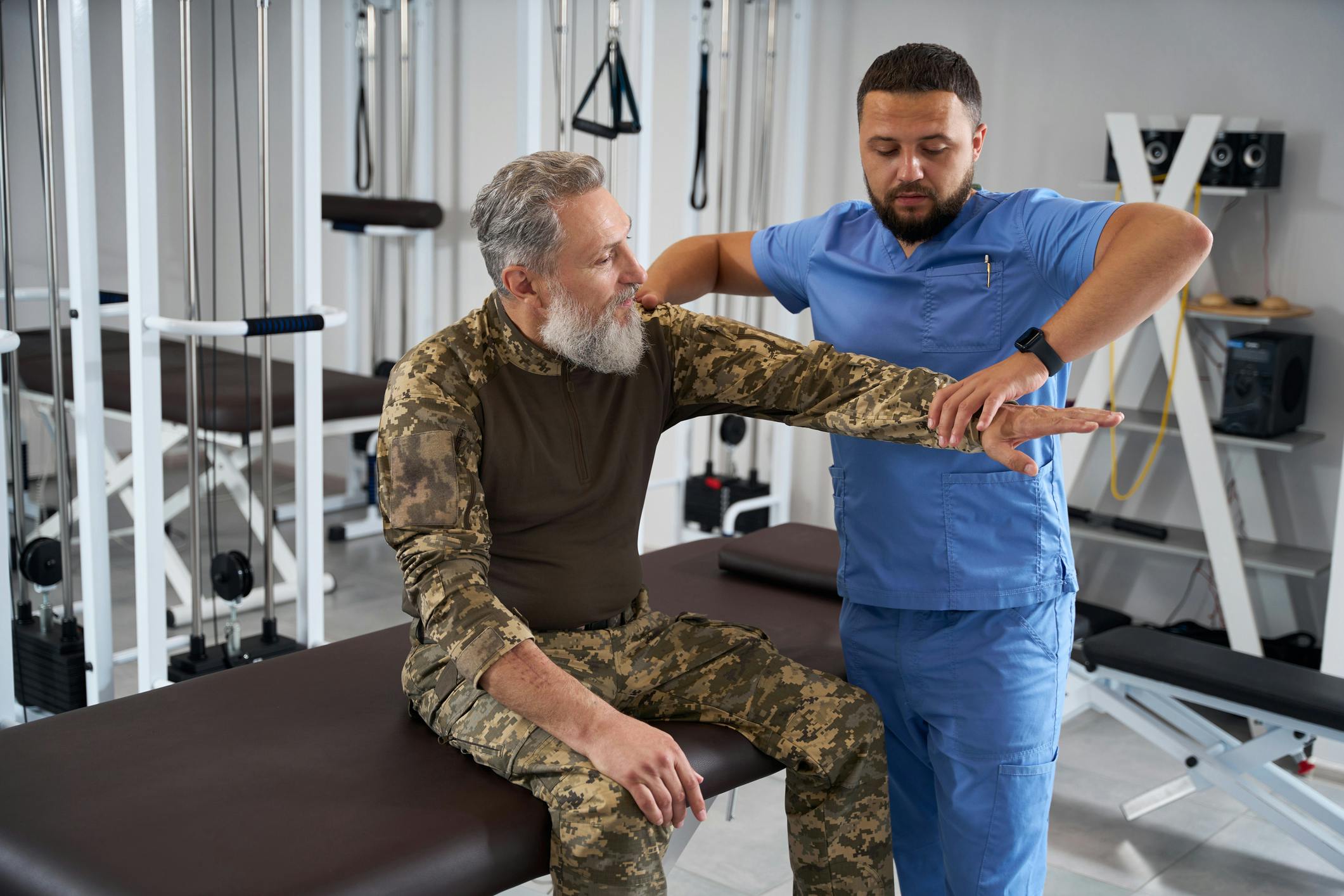
Our mandate is grounded in health-related and ethical considerations. We focus on the provision of healthcare services in conflict and war zones, guided by international standards established by the World Health Organization and World Physiotherapy concerning the role of healthcare professionals in such settings.
Armed conflicts result in extensive and long-term health consequences for both civilians and combatants. Inhumane warfare, including attacks on civilians, healthcare facilities, and humanitarian corridors — significantly exacerbate these impacts. When health systems are weakened or deliberately targeted, both acute medical treatment and subsequent rehabilitation are severely compromised. These services are essential for restoring functional ability, preserving human dignity, and enabling individuals to participate in society.
Physiotherapists play a vital role in the treatment and rehabilitation of injured individuals. This includes patients with amputations, spinal cord injuries, traumatic brain injuries, and complex musculoskeletal conditions. Early and sustained rehabilitation reduces the risk of permanent disability, secondary complications, and long-term dependency. Rehabilitation should therefore not be regarded as a secondary service, but as an integral component of effective and humane healthcare responses in conflict-affected areas.
As a member of World Physiotherapy, the Nordic Associations of Physiotherapists supports the unified call of the international professional community for:
- The protection of healthcare facilities, patients, and healthcare personnel.
- Full compliance with international humanitarian law.
- Respect for the professional independence and medical neutrality of healthcare personnel.
- Unhindered access to humanitarian assistance and essential medical supplies and equipment.
We further support the principles endorsed by the international medical community, including the World Medical Association, which urge all parties to armed conflicts to respect international humanitarian law, refrain from using healthcare facilities for military purposes, and ensure that healthcare professionals are able to treat all patients with humanity and in accordance with professional ethical standards.
Attacks on healthcare infrastructure and restrictions on humanitarian access constitute not only violations of international norms, but also actions with severe and lasting consequences for public health. These actions disproportionately affect children, older people, and individuals with disabilities, who are already among the most vulnerable populations in conflict settings.